
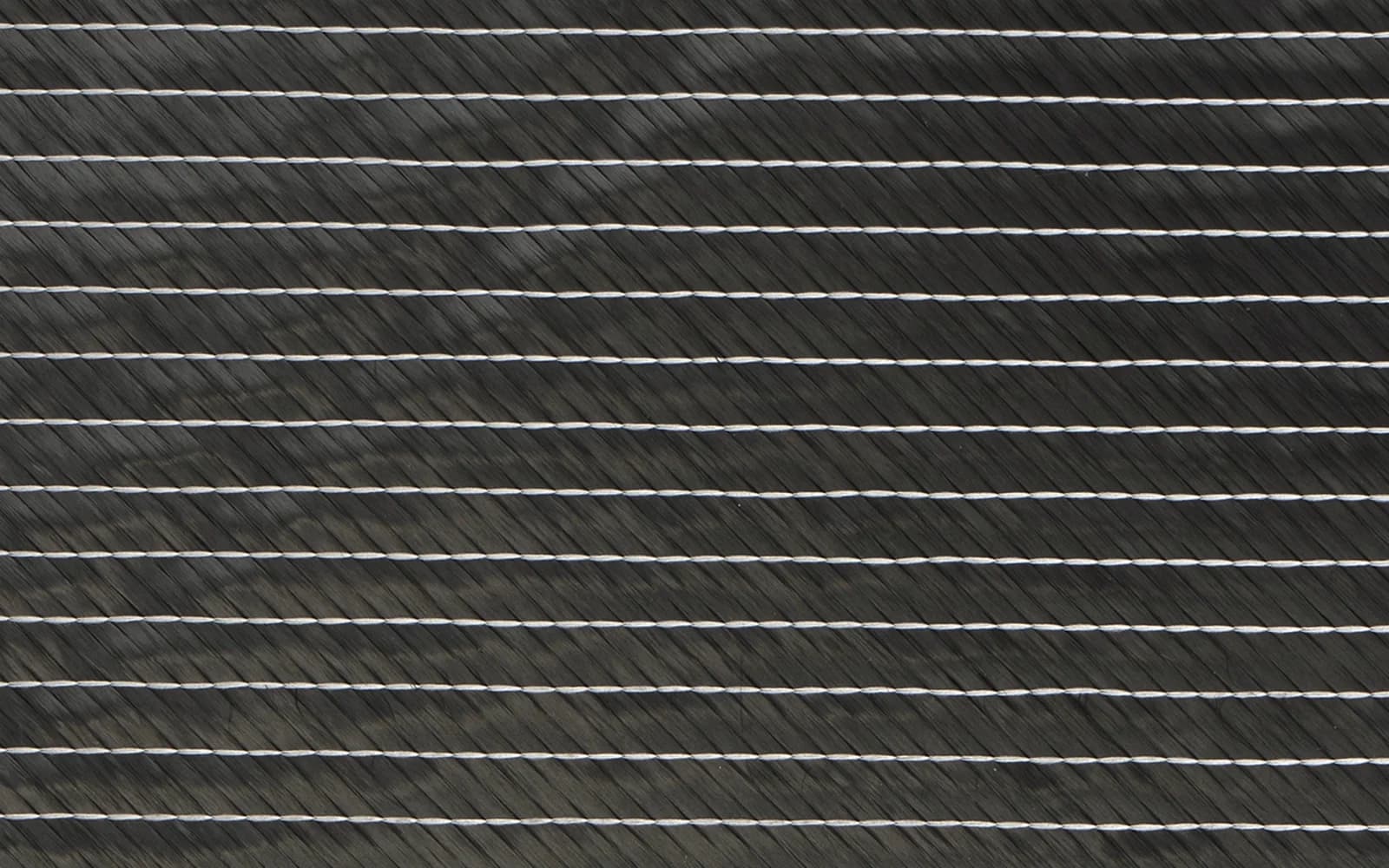
300gsm vs 600gsm Biaxial Carbon NCF Selection Guide in one minute.
Choose 300gsm or 600gsm biaxial carbon NCF from the approved laminate schedule, not from gsm alone. The documented 300gsm family has two 150 g/m² carbon layers in +45°/-45° or 0°/90° constructions. The documented 600gsm product has two 300 g/m² carbon layers in a balanced +45°/-45° construction. The heavier format may reduce ply count, while the lighter format allows finer ply-by-ply control; both require process validation.
Technical review: 2026-07-27
What the terms mean.
Biaxial carbon non-crimp fabric holds two substantially straight directional carbon layers together with lightweight stitching. The gsm value in this guide is the nominal carbon-fiber areal weight before resin. Total dry-fabric weight also includes stitch yarn, and neither dry-fabric value is a cured-laminate mechanical property.
Key differences for material selection.
| Selection point | 300gsm biaxial NCF | 600gsm biaxial NCF |
|---|---|---|
| Documented orientation | +45°/-45° or 0°/90° | Balanced +45°/-45° |
| Carbon layer split | 150 + 150 g/m² | 300 + 300 g/m² |
| Documented dry weight | 300 g/m² carbon; 308 g/m² total | 600 g/m² carbon; approximately 608-612 g/m² total |
| Fiber and stitching | Continuous 12K carbon; polyester 75D tricot stitch | 12K preferred, 24K by agreement; PES 75D or equivalent |
| Published roll reference | 1270 mm x 50 m | 1270 mm x 50 m |
| Laminate planning | Finer ply increments; more plies may be required | More reinforcement per ply; fewer plies may be possible |
| Order control | Use the 300gsm TDS tolerances and approved quotation | Confirm tolerances, usable length, splice policy and COA scope in the order |
How engineers and buyers should choose.
Start with the engineer-approved load directions. The published 600gsm TDS supports +45°/-45° only; do not assume a documented 600gsm 0°/90° construction.
Compare total ply count, layer sequence, cutting plan, placement time and drape rather than choosing from areal weight alone.
Validate permeability, fill time, compaction and fiber-volume targets with the complete resin, core and consumable stack.
Confirm carbon grade, sizing, stitch construction, width, roll length, splice policy, trial quantity and required COA items in the RFQ.
Use the downloadable English TDS files as product references, then approve the final order specification and batch documents before production.
Where this comparison matters.
Typical values to confirm.
| Specification | Typical options |
|---|---|
| 300gsm documented scope | FRPH-CBX300-X +45°/-45° and FRPH-CBX300-B 0°/90° |
| 600gsm documented scope | FRPH-CBX600-45 balanced +45°/-45° |
| Standard roll reference | 1270 mm width x 50 m roll; final tolerances follow the selected TDS and order |
| Matrix review | Epoxy, vinyl ester, unsaturated polyester, polyurethane or phenolic compatibility must be validated for the selected construction |
| Process review | Vacuum infusion, VARTM, RTM, wet lay-up, prepreg conversion or molding parameters require representative validation |
| Performance boundary | Dry-fabric data are not cured-laminate design allowables |
Download the references used in this guide.
These English PDFs are tied to the listed product scope. Confirm the final order specification and required batch documents in the RFQ.
Product pages to compare next.
Details needed before quotation.
Clear RFQ information helps avoid wrong material selection and repeated emails.
Common technical questions.
Is 600gsm biaxial NCF stronger than 300gsm NCF?
Areal weight alone does not determine final laminate strength. Fiber grade, orientation, ply count, resin, processing and laminate design all affect performance.
Is 600gsm 0°/90° carbon NCF covered by the published TDS?
No. The current published 600gsm TDS covers a balanced +45°/-45° construction. A 600gsm 0°/90° request requires separate construction and document confirmation.
Does 600gsm mean the total dry fabric weighs exactly 600 g/m²?
No. In the published 600gsm document, 600 g/m² is the nominal carbon-fiber basis. The typical total dry-fabric weight is approximately 608-612 g/m² including stitch yarn.
Can 300gsm and 600gsm NCF be used in one laminate?
They may be combined when the laminate design calls for it, but the complete stack, resin flow, compaction and cured laminate should be validated by the customer's technical team.
Sources reviewed for this guide.
These references support the general process guidance. Final material approval must use the selected product, resin and process documentation.