
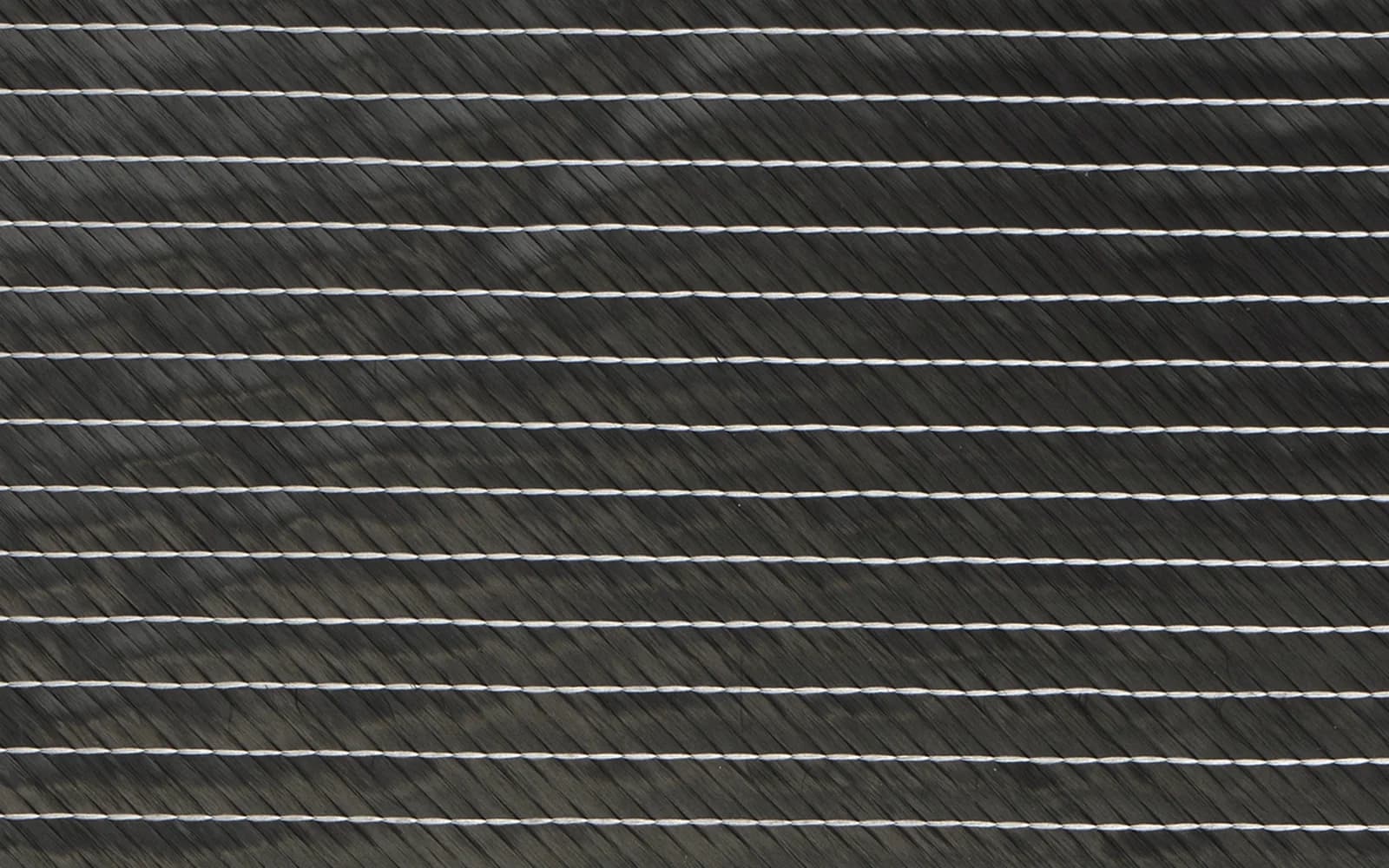
Carbon NCF Roll Acceptance Before Vacuum Infusion in one minute.
Check a carbon NCF roll against the approved order specification, not the word biaxial alone. FRP HOME's documented FRPH-CBX600-45 is a balanced +45/-45 stitched construction with 600 g/m2 of carbon fiber in two nominal 300 g/m2 layers. Confirm roll identity, orientation, usable dimensions, condition and required documents before cutting; validate the selected resin and full laminate stack in a representative process trial.
What the terms mean.
For FRPH-CBX600-45, 600 g/m2 is the nominal carbon-fiber areal weight. The TDS separately lists approximately 608-612 g/m2 for the dry fabric including stitch yarn as typical guidance. A purchase order that says only '600gsm fabric' leaves the measurement basis unclear. Record the product code, TDS revision, carbon-only weight and any agreed total-fabric weight requirement separately. Dry-fabric data are not cured-part mechanical allowables.
Key differences for material selection.
| Receiving check | Documented or agreed reference | Buyer action |
|---|---|---|
| Construction | FRPH-CBX600-45; balanced +45/-45 | Compare order, roll label and a retained sample against the layup drawing. |
| Areal weight | 600 g/m2 carbon; approximately 608-612 g/m2 including stitch, typical | Agree whether the test includes stitching, plus method and sampling plan. |
| Roll format | 1270 mm width and 50 m length, nominal | Confirm usable width, length, edge allowance and splice policy by order. |
| Traceability | Product and roll identity | Record batch and roll identifiers; request a COA only if agreed and available. |
| Textile condition | Stitched dry reinforcement | Agree visual criteria for distortion, broken tows, edges and stitch continuity. |
| Process readiness | Dry fabric, not an infusion guarantee | Trial the intended resin, stack, compaction and flow media. |
How engineers and buyers should choose.
Mark the angle reference on the cutting plan before cutting the first ply. +45/-45 and 0/90 are different architectures; the published 600gsm TDS covers +45/-45, while FRP HOME's 300gsm TDS identifies separate +45/-45 and 0/90 product codes. Headline gsm alone cannot justify a substitution.
Define a usable roll, not just a nominal one. For wide-panel production, state the minimum cutting width after edge allowance, acceptable splices and their marking, winding/core requirements and whether partial rolls can be combined. Confirm measurements in the order specification.
Document packaging condition before opening. Then inspect an agreed sample length for angle alignment, stitching, folds, edges and visible contamination. Photograph any exception with the roll identifier and agree whether to isolate, investigate or accept it; appearance does not establish permeability or strength.
If mass-per-area testing is needed, agree a controlled method such as ISO 3374 and define whether carbon-only or total dry-fabric mass is being evaluated. Mentioning a standard here does not claim a particular FRP HOME batch has been tested or certified to it.
Run a representative infusion trial with the actual roll, fiber direction, ply stack, resin and process conditions. Research on stitched carbon preforms shows that flow can be sensitive to stitch geometry and preform arrangement, so do not infer fill time from this TDS or another project. Reassess the trial if resin, stack or geometry changes.
Where this comparison matters.
Typical values to confirm.
| Specification | Typical options |
|---|---|
| Product code | FRPH-CBX600-45 |
| Fiber directions | +45/-45 relative to the agreed roll reference |
| Carbon areal weight | 600 g/m2 nominal; 300 g/m2 in each directional layer |
| Total dry-fabric weight | Approximately 608-612 g/m2 including stitch yarn, typical guidance |
| Width and roll length | 1270 mm x 50 m nominal; usable dimensions and tolerances by order |
| Batch documents | COA or inspection record only when agreed and available |
Download the references used in this guide.
These English PDFs are tied to the listed product scope. Confirm the final order specification and required batch documents in the RFQ.
Product pages to compare next.
Details needed before quotation.
Clear RFQ information helps avoid wrong material selection and repeated emails.
Common technical questions.
Does 600gsm include the stitching yarn?
No. In the FRPH-CBX600-45 TDS, 600 g/m2 is nominal carbon weight. Total dry-fabric weight including stitch yarn is a separate typical reference of approximately 608-612 g/m2.
Can a 600gsm +45/-45 NCF roll replace a 300gsm 0/90 construction?
Not without engineering review. The orientations and layer weights differ, and the approved laminate design controls any substitution.
Does a clean-looking NCF roll prove it will infuse well?
No. Receiving inspection addresses identity and visible condition. Resin flow and finished-part quality require process-specific evaluation with the chosen resin and laminate stack.
Sources reviewed for this guide.
These references support the general process guidance. Final material approval must use the selected product, resin and process documentation.