
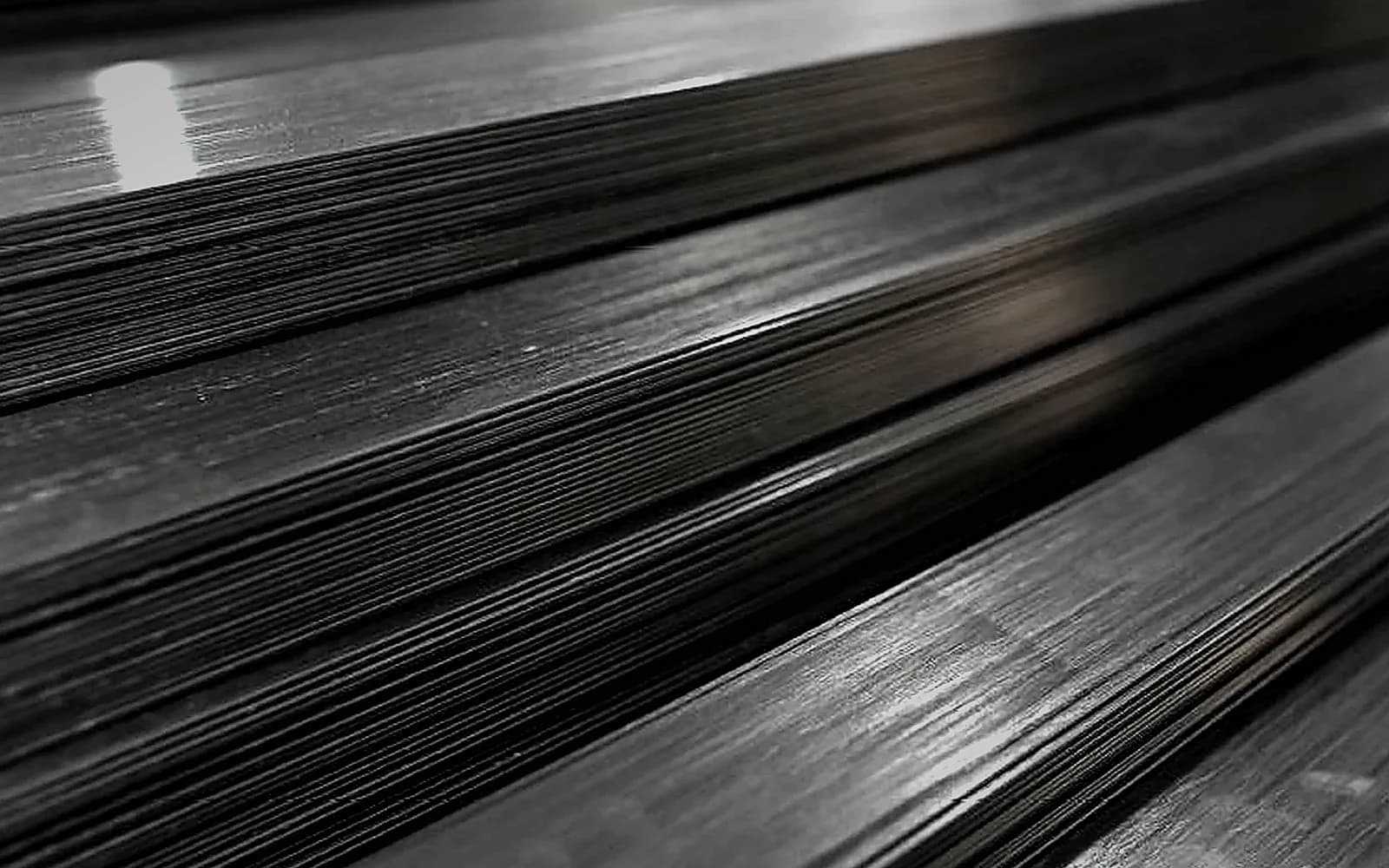
CFRP Plate vs Carbon Fiber Fabric for Structural Strengthening in one minute.
Use pultruded CFRP plate when the approved strengthening design calls for a narrow, dimension-controlled laminate strip. Use UD carbon fiber fabric when the design requires directional reinforcement over broader, curved or wrapped surfaces. FRP HOME's published references cover a 1.2 mm pultruded plate, a 300 g/m² UD product TDS and a narrower legacy-source 200 g/m² strengthening-fabric supply reference; none replaces structural design or approval of the complete adhesive system.
Technical review: 2026-07-27
What the terms mean.
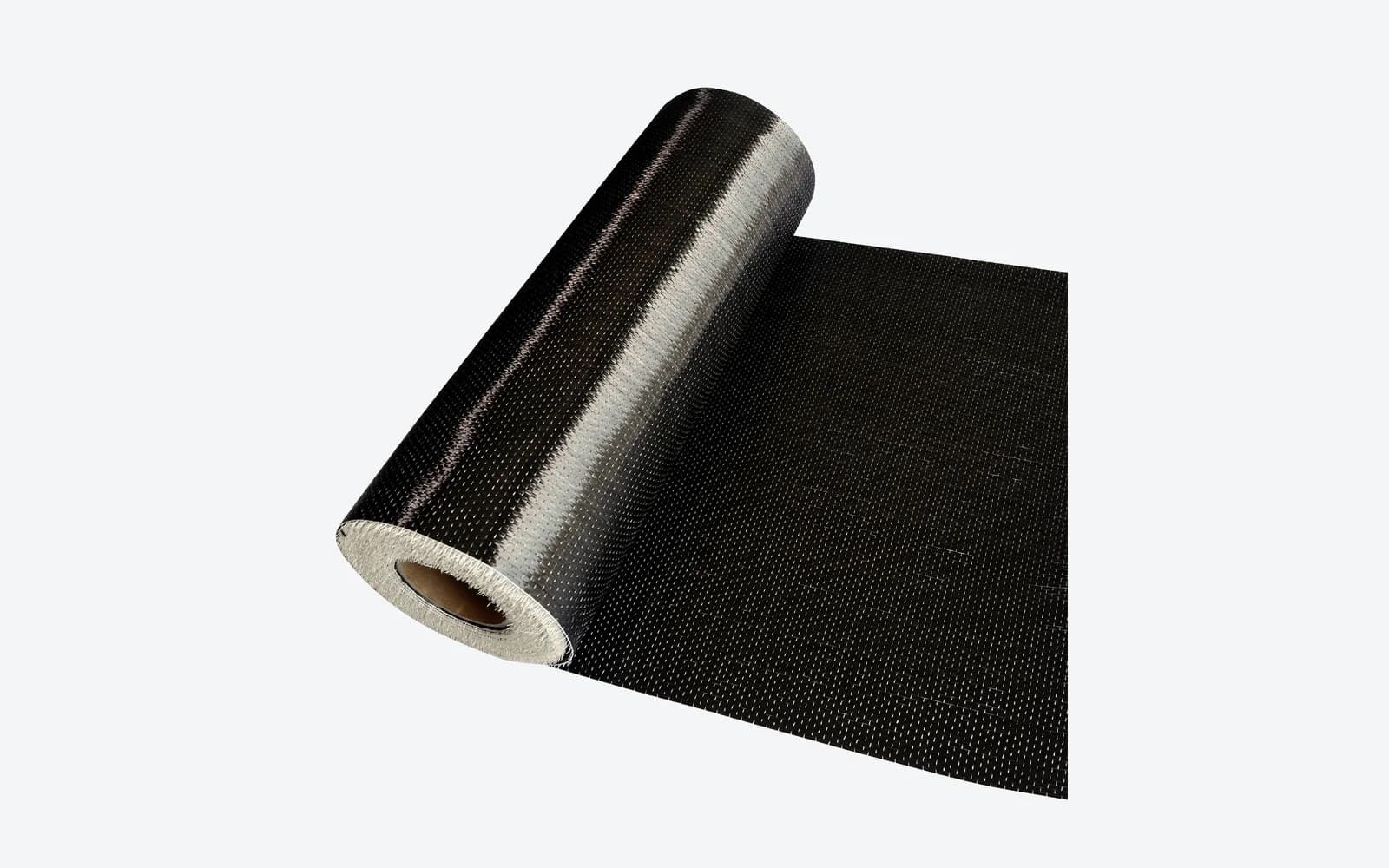
Pultruded CFRP strengthening plate is a cured, dimensioned laminate used as an externally bonded system component. UD carbon fiber fabric is a dry reinforcement that places most fibers in one direction and must be impregnated or bonded with an approved resin system. They are different material forms with different RFQ fields, installation controls and engineering responsibilities.
Key differences for material selection.
| Item | CFRP plate | UD carbon fiber fabric |
|---|---|---|
| Published FRP HOME reference | FRPH-CFRP-PLATE-1.2; source model ZCP1.2 | FRPH-UD300 product TDS; FRPH-UD200-SUPPLY legacy-source reference |
| Supplied form | Pultruded, cured CFRP laminate strip | Dry unidirectional carbon reinforcement roll |
| Documented size basis | 1.2 mm nominal thickness; width, length and tolerances by quotation | 300 g/m²: 0.167 mm nominal and 100-500 mm width; 200 g/m² source reference: 0.111 mm nominal, width by quotation |
| Geometry | Linear strip reinforcement | Broad, curved or wrapped surface reinforcement |
| Bonding route | Compatible structural plate adhesive | Compatible saturating or bonding resin system |
| RFQ focus | Width, length, thickness tolerance, bonding surface and adhesive | Areal weight, width, roll length, direction, backing and resin |
| Approval boundary | Plate, substrate, adhesive, anchorage and installation reviewed as one engineered system | Fabric, substrate, resin, overlap and installation reviewed as one engineered system |
How engineers and buyers should choose.
Start from a qualified engineer's design actions, substrate assessment and approved strengthening layout; do not substitute one material form from a website comparison.
Use the plate route when the design specifies externally bonded laminate strips with controlled width, thickness, length, surface preparation and termination details.
Use the UD fabric route when the design specifies directional surface reinforcement, broad-area bonding or wrapping around compatible geometry.
Confirm primer, putty, saturant or plate-adhesive scope separately. Compatibility cannot be inferred from the carbon material alone.
Request the selected TDS, final order specification and project-required batch documents before approval and installation.
Where this comparison matters.
Typical values to confirm.
| Specification | Typical options |
|---|---|
| Documented CFRP plate | 1.2 mm nominal pultruded plate; width, length and tolerances by quotation |
| Plate source-model values | 2620 MPa tensile strength, 165 GPa modulus, 1.7% elongation, >68% fiber volume and 1.6 g/cm³ density; typical source values with test methods not stated |
| Plate design status | Source-model values are not project design allowables or batch values |
| Documented 300 g/m² UD fabric | 0 degree UD, 0.167 mm nominal dry-fabric thickness and 100-500 mm width |
| 200 g/m² strengthening supply reference | 0 degree UD, 0.111 mm nominal dry-fiber thickness; width, grade, sizing and current source by quotation |
| UD fiber grade | T300 / T700 or alternate grade by confirmed order and matching document review |
| UD performance status | System-dependent; confirm fiber, resin, cure and test method |
Download the references used in this guide.
These English PDFs are tied to the listed product scope. Confirm the final order specification and required batch documents in the RFQ.
Product pages to compare next.
Details needed before quotation.
Clear RFQ information helps avoid wrong material selection and repeated emails.
Common technical questions.
Can CFRP plate and UD fabric be used together?
They may be specified in the same project for different strengthening actions, but each material, substrate zone, adhesive route, termination and installation procedure must follow the approved engineering design.
Does FRP HOME provide structural design?
FRP HOME supplies material and data support. Structural design responsibility remains with qualified engineers.
Is the published 1.2 mm CFRP plate strength a guaranteed project design value?
No. The published values are typical source-model references and the legacy test method was not stated. Project design allowables, applicable safety factors, order tolerances and batch values require qualified engineering and the approved project documentation.
Does 0.167 mm describe the cured thickness of 300gsm UD fabric?
No. It is the nominal dry-fabric reference in the current TDS. Cured laminate thickness depends on fabric construction, resin content, compaction, ply count and processing.
Is the 200gsm strengthening-fabric supply reference a current batch certificate?
No. It is derived from a legacy TCU20 source record and retains only clearly readable construction fields. Current source, fiber grade, sizing, width, roll, resin compatibility and batch documentation must be confirmed before quotation and project approval.
Can the same epoxy be used for both UD fabric and pultruded plate?
Do not assume so. UD fabric generally requires a suitable saturating or bonding resin, while plate installation requires a compatible structural adhesive. The complete system must be approved for the substrate, environment and installation method.
Sources reviewed for this guide.
These references support the general process guidance. Final material approval must use the selected product, resin and process documentation.